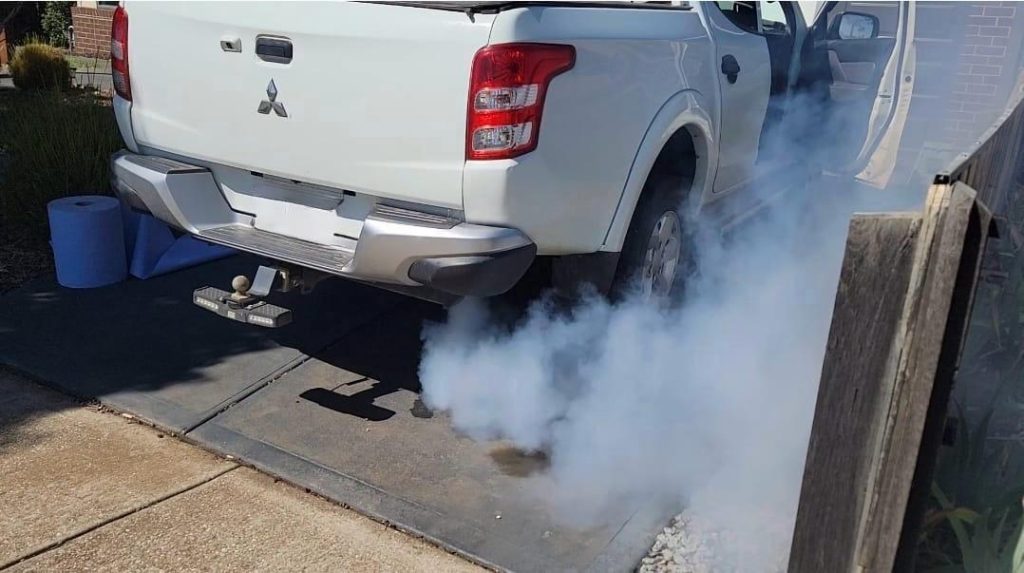
DPF regeneration is the process of burning off the accumulated soot inside the filter, converting it into less harmful gases like carbon dioxide. This helps to restore the DPF’s efficiency and keeps your engine breathing properly.
There are three types of DPF regeneration:
Passive Regeneration:
Happens automatically during normal driving at highway speeds when the exhaust temperature is high enough to burn off the soot. Most drivers aren’t even aware it’s happening.
Active Regeneration:
Kicks in when the DPF is getting too full but normal driving conditions aren’t hot enough. The engine control unit (ECU) triggers extra fuel injection to raise the exhaust temperature and clean the filter.
Forced Regeneration:
Needed when the DPF is too clogged for the vehicle to regenerate itself. This requires a diagnostic tool and a technician, and if ignored for too long, could lead to expensive DPF replacement or engine damage.
Soot is basically carbon, and carbon needs a very high temperature to burn. For the soot in the DPF to turn into gas (mainly carbon dioxide, or CO₂), the exhaust gases need to reach a minimum temperature of around 250°C to 600°C, depending on the system.
These high temperatures are necessary because soot doesn’t just disappear — it needs to oxidise, or chemically react with oxygen, to turn into gas.
-Passive Regeneration
Passive regeneration is the most natural and efficient way your DPF stays clean. It occurs automatically during normal driving, particularly when:
The vehicle is driven at sustained speeds (e.g. motorway or highway driving)
Exhaust gas temperatures reach around 250°C–500°C
The engine load is consistent (e.g. towing, cruising at high speed)
At these higher exhaust temperatures, the soot in the DPF is continuously oxidised and converted into carbon dioxide — without any intervention from the vehicle’s ECU or fuel system.
Why Passive Regen Is Important
No driver input needed – it happens automatically while you drive.
No extra fuel used, making it more economical than active regen.
Extends the life of your DPF and reduces the need for forced regenerations.
Keeps your engine running at its best.
When Passive Regen Doesn’t Work
Unfortunately, not all vehicles get the conditions needed for passive regeneration. If you:
Regularly drive short distances
Do a lot of stop-and-go city driving
Idle your engine for long periods
… then your vehicle won’t reach the required exhaust temperatures, and passive regen won’t complete properly. This can cause soot to build up in the DPF, eventually triggering an active regeneration.
– Active regeneration
Active regeneration is a built-in process controlled by the vehicle’s ECU (Engine Control Unit) to clean the Diesel Particulate Filter (DPF) when passive regeneration isn’t enough — usually because the exhaust temperature hasn’t been high enough during normal driving.
When the soot level in the DPF reaches a certain threshold (usually around 45–70% full), the ECU automatically starts active regeneration to burn off the excess soot.
Unlike passive regen, active regeneration raises the exhaust temperature on purpose. Here’s how the system does it:
Extra Fuel Injection
The ECU injects a small amount of extra fuel during the engine’s exhaust stroke, after the main combustion event.
Diesel Oxidation Catalyst (DOC)
This fuel flows through the exhaust system and burns inside the DOC, producing intense heat — raising exhaust temps to around 600°C–650°C.
High Exhaust Temp Burns Soot
These high temperatures flow into the DPF, allowing the soot to oxidise into carbon dioxide (CO₂) — clearing the filter.
Regeneration Completes
Once the soot load drops to a safe level (often below 20%), the ECU stops the process, and normal driving resumes.
⏱️ How Long Does It Take?
Active regeneration usually lasts 5 to 20 minutes.
It’s designed to happen while you’re driving at a steady speed, typically over 40 km/h (25 mph).
🔍 Signs of Active Regen
Elevated idle RPM
Slight increase in fuel consumption
Engine fan running more frequently
Possible fuel smell from exhaust
Some vehicles may show a regen notification
🚦 What Interrupts Active Regen?
If the vehicle slows down, idles too long, or is shut off too early, regeneration might not finish. If this keeps happening, soot builds up further, triggering DPF light and check engine light.
Fault Codes Can Prevent Regen
If there are active fault codes stored in the Powertrain Module (PTM) — such as issues with sensors, EGR, turbo, glow plugs, or fuel system — the ECU may block active regeneration altogether.
This is because the system needs to ensure safe and complete combustion during regeneration. If there’s an unresolved issue that could affect temperatures, fuel delivery, or exhaust flow, the ECU will disable regen to avoid damage or a failed attempt.
➡️ So if your DPF warning light is on and regen isn’t occurring, it’s often due to an active fault in the PTM that must be cleared before regeneration is allowed.
✅ All Conditions Must Be Met for Active Regen to Start
Active regen will only begin if very specific conditions are met, which include:
🌡️ Engine Temperature
Engine must be at normal operating temperature
Coolant and engine oil temps must be within a safe range
🛢️ Oil Level
Oil must not be too low (to protect engine)
Oil must not be too high (to prevent risk of diesel dilution)
🌡️ Ambient (Outside) Temperature
Extremely cold conditions may delay or block regen
❗ Sensor Faults Can Block Active Regeneration
Even if the engine and DPF are working fine, any faulty sensor related to the above systems can prevent active regeneration from starting.
Here are common examples:
Coolant temperature sensor faulty → ECU thinks engine is too cold
Oil level/temperature sensor faulty → ECU thinks level is too high/low
DPF pressure sensor or exhaust temp sensor faulty → ECU can’t safely control temperature
Any active fault code in the PTM → Active regen is disabled
➡️ The ECU relies heavily on sensor data to decide if it’s safe and effective to start regeneration. If it gets the wrong information — even from one sensor — it will cancel the regen attempt to avoid risk.
🔍 Why This Happens
Many sensor issues are “soft faults”, meaning they send incorrect readings but stay within a range that doesn’t immediately trigger a diagnostic trouble code (DTC).
The ECU uses this inaccurate data and assumes the required conditions for regen haven’t been met — so it silently cancels or blocks active regeneration.
This causes soot to keep building up, even though there’s no visible warning.
📋 Common Examples:
A coolant temp sensor reading 60°C when the actual engine temp is 90°C → ECU thinks the engine is too cold to regen.
A blocked or sluggish oil temp sensor → ECU thinks oil temp is unsafe.
An exhaust temp sensor that’s off by 50°C → regen cycle fails to start or complete.
An ambient temperature sensor that reads -20°C on a 15°C day → regen blocked.
– Forced regeneration
Forced regeneration is a manual process to burn off excessive soot in the Diesel Particulate Filter (DPF) when automatic regeneration can no longer complete due to high soot levels or system faults.
There are two types of forced regeneration:
Driver-Initiated Forced Regen
Available on some trucks and heavy-duty diesel vehicles
The driver can press a regen button inside the cockpit (usually near the dashboard or gear selector)
Used when the vehicle warns of high soot load, but conditions are still safe for regeneration
Scan Tool-Triggered Forced Regen
Performed by a trained technician using a diagnostic scan tool
Done when the DPF is severely clogged (typically above 85–100%)
Requires all conditions (sensor data, temps, oil level, etc.) to be met
🅿️ Static Forced Regeneration
This type of regen is performed while the vehicle is parked.
Carried out using a diagnostic tool (or cockpit button in trucks)
Engine RPM Is Controlled Automatically:
Once the regen is triggered, the ECU takes full control of the engine
The RPM will automatically rise to around 2,500–3,000 RPM
The driver or technician does NOT need to press the accelerator
This elevated RPM helps raise the exhaust temperature to burn off soot in the DPF
Vehicle remains stationary during the entire regen
Typically takes 15–45 minutes, depending on soot level and vehicle model
Common on passenger vehicles and light commercial vehicles
Requirements:
Safe, well-ventilated space (due to high exhaust temps)
All regen conditions must be met (engine temp, oil/coolant level, no critical faults)
🚛 Dynamic Forced Regeneration
This method requires the vehicle to be driven during the regeneration process.
Triggered by a technician via diagnostic tool, but must be completed while driving
ECU manages regen while the driver maintains a steady speed and load
Common in some trucks, buses, and heavy-duty diesels
Often used if static regen fails, or manufacturer prefers active conditions for soot burn-off
Requirements:
Suitable road for steady driving (e.g. highway)
Close monitoring via diagnostic tool or dash prompts
All system parameters must still be within safe ranges
Book a CarbonTech DPF Clean Today
🚐 Mobile service – we come to you
⏱ Fast – most jobs done in under 1 hour
💨 Effective – immediate reduction in pressure and soot
🧪 Safe – non-invasive, no DPF removal required