
A safe, preventive engine decarbonise that helps your diesel (or petrol) run smoother, use less fuel and produce less soot — which means less load on your DPF.
We use hydrogen (HHO) carbon cleaning — electrolysis splits water into hydrogen and oxygen, which is fed into the intake to raise combustion temperature and help break down carbon build-up through the engine. The only inputs are water and electricity, and the process is safe.
FlexFuel's controlled WLTP emissions test, before vs after an engine carbon clean:
| Measure | Before | After | Change |
|---|---|---|---|
| CO (carbon monoxide) | 0.38 g/km | 0.01 g/km | ↓ ~97% |
| NO (oxides of nitrogen) | 2.10 g/km | 1.55 g/km | ↓ ~26% |
| Particulate matter (soot) | 2.18 mg/m³ | 1.96 mg/m³ | ↓ ~10% |
| CO₂ | 663.6 g/km | 611.4 g/km | ↓ ~8% |
| Fuel economy | 29.70 L/100km | 27.34 L/100km | ~8% better |
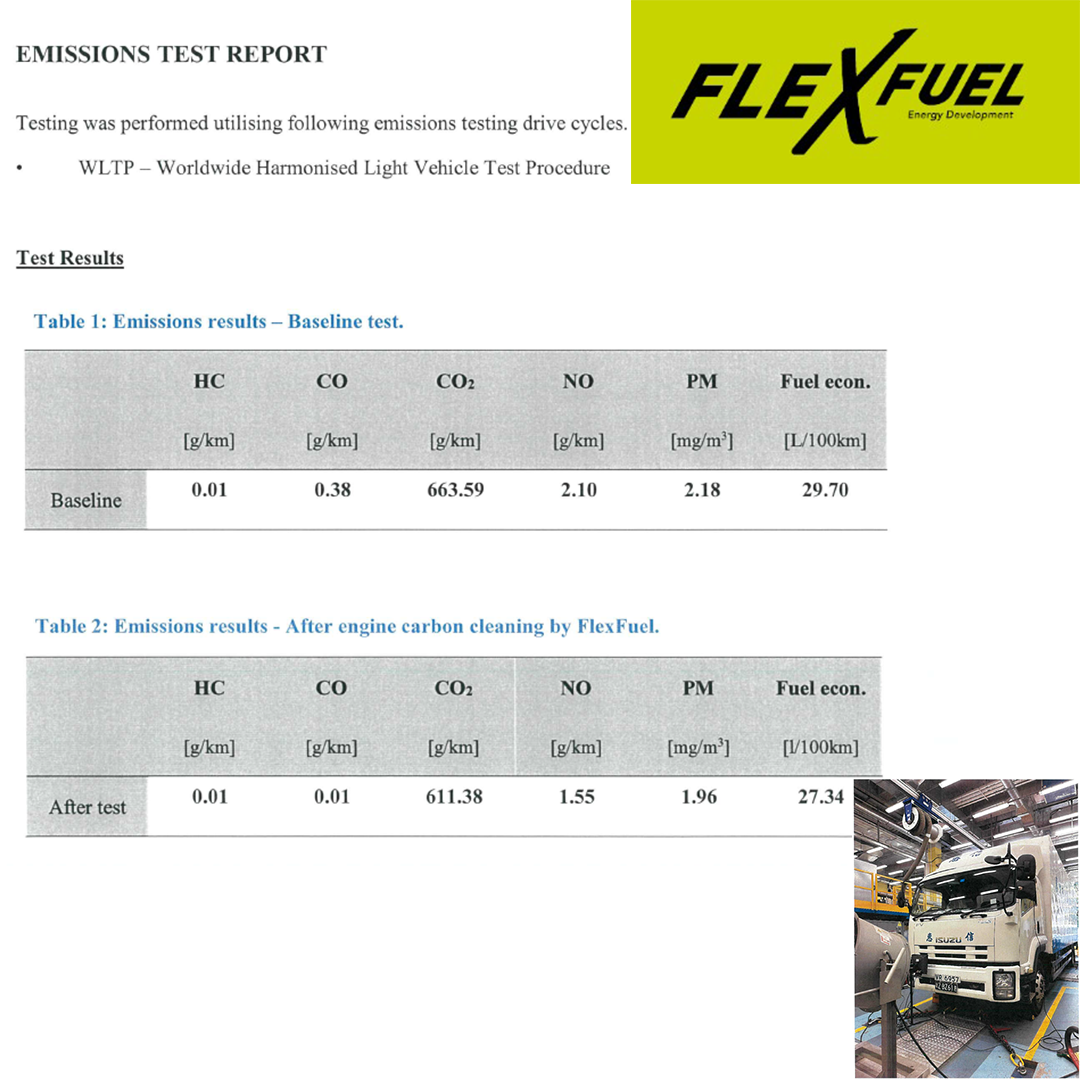
We also run our own before/after exhaust-gas test on a Bosch analyser on jobs — so you see the result on your car.
Less emission means less soot — and less soot means less DPF loading. Cleaner combustion lets your DPF keep up with its own self-cleaning, so it blocks less often and lasts longer. That's why we recommend it as preventive maintenance, especially for older engines and short-trip drivers.
Hydrogen cleaning is preventive — it's not a repair. It won't fix an already-faulty EGR or a broken part. It makes your systems last longer; it doesn't mean they'll never break.
From $400, mobile across Melbourne. Often done alongside a DPF clean to protect the result.